After 20-some years of using a dated planner everyday, I’m making this simple swap instead.
I’ve been obsessed with paper planners for pretty much as long as I can remember.
It started in elementary school. Each year, we got a red-and-white planner that was one of my favorite parts of a new school year. If I forgot to write an assignment in my planner, it likely wasn’t getting done.
In high school and college, I began buying planners on my own. I kept all my assignments and life tasks in this magical little book purchased in August and lasting though the next June or July.
Even after getting a full-time corporate job, I would buy a planner each year to keep track of appointments, make to-do lists and plan out my weeks. I love the feel of the paper, and the analog nature of keeping this offline.
But I found that I’d miss some days or even go entire weeks without touching my planner. Taking a sick day? I’m not writing a to-do list! Spending a week on vacation? That’s a whole week blank. And let’s not get started on days or weeks when my mental health isn’t in the best of shape and I’m not as productive as I’d like to be.
While I’d use some of those pages like notebook paper for other notes to myself or lists, it sometimes felt like missing out on what I’d already bought. And, I realized I was hard on myself for missing weeks or days at a time in my planner.
In 2026, I’m changing up my strategy for something even easier, and creating a system that allows me to be both kind to myself and still productive.
To all the planners I’ve loved before
Over the years, I’ve a slew of Target planners. I liked the layout of many of these, with a week on the left and a blank page on the right. However, I didn’t love that it crammed a whole week into one page. I like to make pretty granular to-do lists and I tend to be balancing a few projects, so I sometimes couldn’t fit everything I needed into one page.
In 2024, I splurged for the Japanese Hobonichi Techo Weeks book, and I came to love the layout of it. The one page per day spread was the ideal fit for my larger-than-average handwriting and fit my prolific to-do lists. It gave me enough space to break out my to-do lists into several categories, which allowed me to write separate to-do lists for my personal life, my corporate job and my writing projects like this blog. I found that incredibly helpful so that I could work down a list without having to change gears too much.
The Hobonichi Techo is a great planner, and I do love it. While they’re pricey, they are something I may go back to in the future. I really recommend the Hobonichi Techo Cousin if you want a dated planner — its generous A5 size allows you to really get down everything you could possibly need to as well as make notes and even do some light journaling on the same pages. The lay flat binding also makes writing less difficult.
In 2025, I found the glory of Muji’s undated A5 planner on a trip to Japan. I bought one and kept it for January 2025, when my Techo’s dates ran out. I loved the fact that it was undated. I could take a week off of creating a weekly plan when I needed to, while I could still create monthly spreads in the beginning pages. But in the weekly system, it still crammed a week on the left page and a grid page on the right.
I learned to make peace with this by using a number of sticky notes. I did like the Muji undated planner because it gave me a place to keep track of what my week would look like while still giving me the ability to skip a week when needed and not be hard on myself.
However, at this point in mid-to-late 2025, I was writing to-do lists on scraps of paper and sticking them in the Muji. Which just made that planner a mess. I needed a new solution.
What I’m doing instead of buying a 2026 planner
Around this time, I discovered the glorious idea of a travelers notebook. This discovery came, of course, from TikTok, since the Paper Republic and the Louise Carmen notebook system were trending hard.
I became absolutely obsessed with the idea of these. The little charms and decorative elements? The pretty leather? And, it would allow me to keep all of my notebooks in one place.
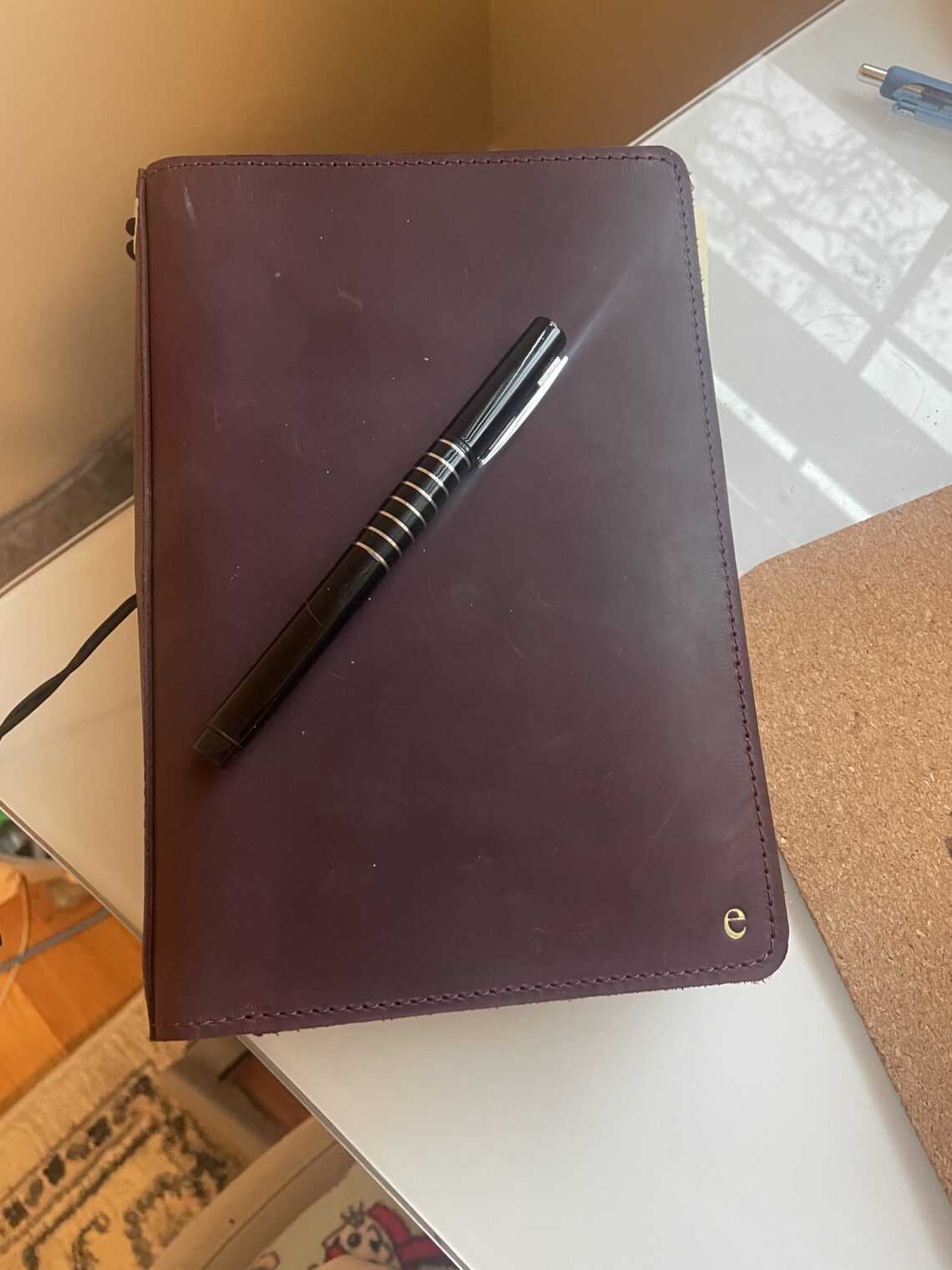
I decided to spring for an Etsy version for about $55. While I would have loved to get a Paper Republic or a Louise Carmen, they were a bit out of my budget. Here’s what I ended up with:
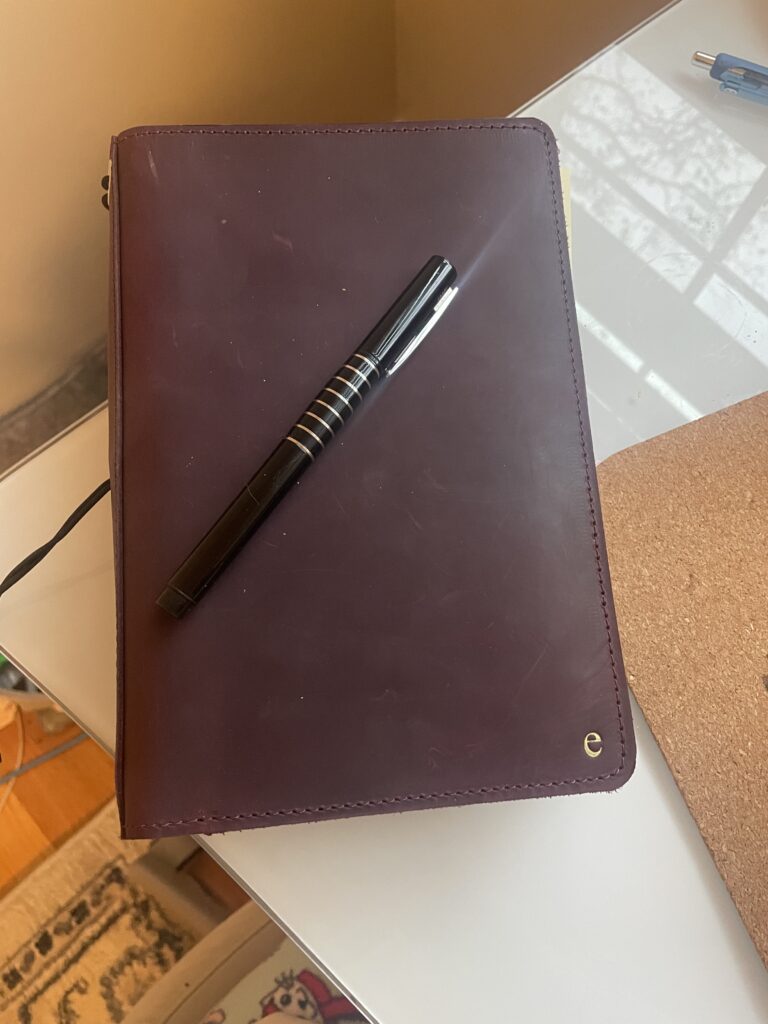
I popped a few of the A5 notebooks I already had in the cover, as well as my Muji weekly/monthly planner. I still have quite a few pages left — I estimated that I only used about half of the undated pages last year. (I only date them as I use them!)
Now, my daily planner is a blank Moleskine notebook. I set up a blank page each morning, borrowing some elements from the Hobonichi and some from my own needs. I lay out each day with an hourly schedule from 9 am to 5 pm vertically on the right side and fill in any appointments or meetings. Then, I add columns for my work stuff, personal life and blog stuff and put all of my to-do items into these categories.
On Monday mornings, I go back into my Muji planner and set up a week, and the same goes for the beginning of the month. I reference these things to put into my daily planner as I move through the week.
While a blank page can be intimidating, I have really been loving this method so far. It’s helped me to be easier on myself and productive on my own terms. And, no wasted blank pages staring at me.
If you try this method for 2026, I’d love to hear from you! Did you like it? Does it work for your brain too? Let me know!